How to Build Your Own Custom Nutrition Plan (Without an Advanced Degree)
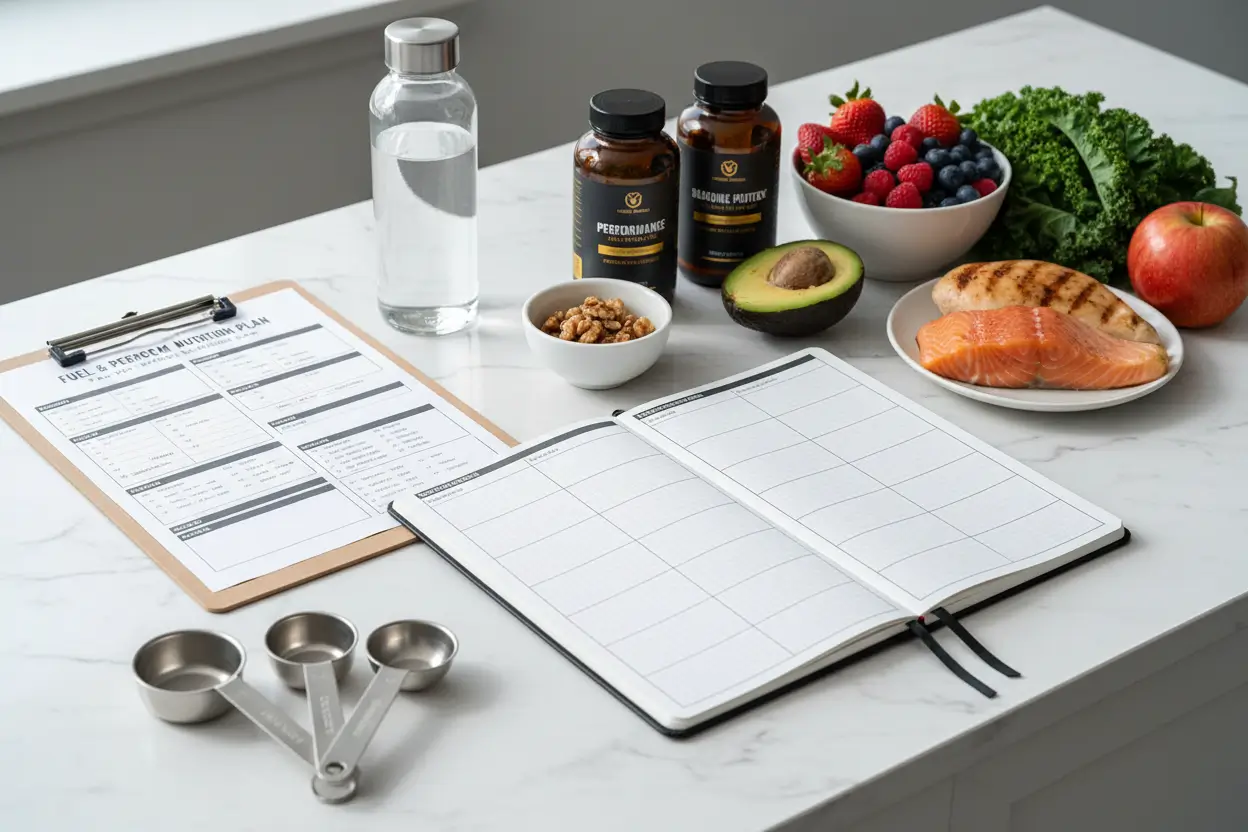
Most people think they need a dietitian, a stack of textbooks, or a certification wall to create a nutrition plan that actually works. The truth is simpler: you need a clear framework, a little self-awareness, and the willingness to experiment.
Here’s how anyone can build a personalized nutrition plan that supports their goals, energy, and long-term health.
Step 1: Start With Your Goal (Be Specific)
Your nutrition plan should match the outcome you want, not the trend you saw online.
Choose one primary goal:
- Fat loss
- Muscle gain
- Improved energy
- Better digestion
- Athletic performance
- General health and consistency
Then define what success looks like.
Example: “Lose 10 lbs over 12 weeks” or “Build strength and hit 4 workouts per week.”
Specific goals create specific nutrition strategies.
Step 2: Establish Your Baseline (Before Changing Anything)
You can’t improve what you don’t measure.
Track for 3–5 days:
- What you eat
- When you eat
- How you feel (energy, hunger, digestion)
- Sleep
- Training
This isn’t about judgment — it’s data collection.
Your baseline becomes your starting point, not a moral scorecard.
Step 3: Set Your Daily Targets (Keep Them Simple)
You don’t need macros down to the decimal. Start with the big rocks.
Protein
Aim for a range that supports recovery and satiety.
Most people do well with:
- 0.6–1.0 grams per pound of goal body weight
Produce
- 2–4 servings of fruits
- 2–4 servings of vegetables
This covers fiber, micronutrients, and volume.
Hydration
- 2–3 liters of water daily
- Add electrolytes if you train hard, sweat heavily, or live in a dry climate
Calories (Optional)
If you want fat loss or muscle gain, a rough calorie target helps.
If you want general health, you can skip calorie counting entirely.
Step 4: Build Your Meal Structure
Consistency beats perfection.
Choose a structure that fits your lifestyle:
- 3 meals + 1 snack
- 2 big meals + 2 small meals
- 3 evenly spaced meals
- Training-day vs. rest-day variations
Then plug in your “big rocks”:
- Protein at every meal
- Produce at every meal
- Carbs around training if performance matters
- Healthy fats for satiety and hormone support
This is where your plan becomes yours.
Step 5: Experiment for 2 Weeks (Then Adjust)
Your body gives you feedback — you just have to listen.
Track:
- Energy
- Hunger
- Cravings
- Digestion
- Training performance
- Sleep
- Mood
If something feels off, adjust one variable:
- Increase protein
- Add more carbs around training
- Reduce processed foods
- Increase fiber
- Add electrolytes
- Adjust meal timing
Small changes lead to big improvements.
Step 6: Layer in Supplements (Only After the Basics)
Supplements should support your plan, not replace it.
Start with foundational options:
- Protein powder (convenience)
- Creatine monohydrate (strength, recovery)
- Electrolytes (hydration)
- Omega‑3s (inflammation, heart health)
- Magnesium (sleep, recovery)
Then add goal-specific supplements if needed.
Step 7: Review Monthly and Evolve the Plan
Your nutrition plan should grow with you.
Every 4 weeks, ask:
- What’s working
- What’s not
- What needs adjusting
This is how you build a sustainable, personalized system — not a temporary diet.
The Bottom Line
You don’t need a degree to understand your body.
You don’t need a strict diet to make progress.
You don’t need perfection to see results.
You need:
- A clear goal
- A simple structure
- Consistent habits
- Willingness to adjust
Nutrition doesn’t have to be complicated it just has to be yours.